Carbohydrates: contrary to popular belief…

There are so many scientific claims that suggest that carbohydrates are bad for us, we should moderate our intake, etc. Before you read this, what is your view on carbs? If you moderate your carbohydrate intake, why do you do so?

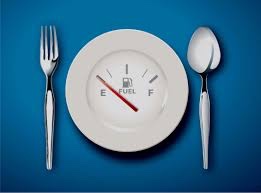
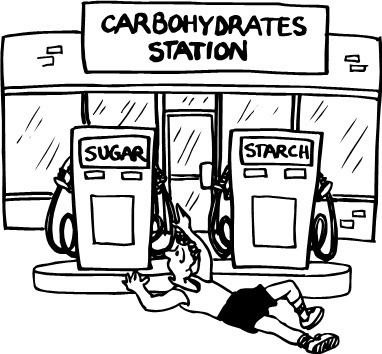
The truth is, a carbohydrate is a macronutrient and one of the most important at that. Carbohydrates are our body’s main source of fuel. It is the easiest to break down and the easiest to replenish. Anytime we go running, do a moderate to intense exercise, our body predominantly depend on carbs. Having these stores readily available is what makes our bodies successful and efficient. When we deny our bodies an adequate amount of carbohydrates, what happens? Our bodies get slower, concentration gets hindered, let’s be honest, we don’t feel well at all. Why is this?

Well, we get slower because we have little to no fuel and our body is in the process of making more energy by attempting to turn your fat into a usable form of energy.

Why do we lose concentration though? We lose concentration because carbohydrates are the ONLY (yes I said only) substrates that our brain can use as fuel.

Contrary to what you may believe or what you’ve heard, our bodies can’t just use carbohydrates, fats and proteins for energy. They all have to be broken down in simpler forms for our body to be able to use them as energy. Carbohydrates, for example, undergo a chemical reaction to produce glucose. Glucose can be used immediately to produce ATP, which is our bodies form of energy, or it can be stored in the muscle or the liver as glycogen to be used when needed.

Because carbohydrates are stored in the muscle, they are readily available when we need them during exercise.

Although we may feel that tricking our body into using fat or protein for energy is ideal for our goals, it’s not the efficient or healthy way to go. Fat takes an extended amount of time to be broken down to produce ATP and it is also stored in various places throughout the body so it is our second line of defense for energy, no matter what. Protein can be an energy source but it should be saved for its primary structure function of repairing tissues.

Instead of monitoring how many carbohydrates we intake, we should turn our focus to the TYPES of carbohydrates you intake. Instead of sugars (simple) carbohydrates, focus on intaking complex carbohydrates such as whole grains that the body can benefit from. Always remember that we eat to provide our bodies with fuel.

I heard once before,

“You wouldn’t put the cheap gas into a Ferrari, don’t put junk in your body”

You want the highest performance and to be sure the engine continues to run just right. Not only do we want to steer clear of junk food, we don’t want to deny our body what it NEEDS either. Therefore, we should only put the best fuel into our bodies because our lives and futures are priceless.

In health,

Dani Avant
Controlling Calories: A Stronger Perception

If we eat, we know about calories. We ALL know calories. We’re all familiar with this dreaded conversation. I’m here to share with you a better understanding of what calories are and why tracking them is so important to help you reach your goals.

Regardless of what you’ve heard before, calories are not the enemy. Calorie is a general term for energy, you know, that thing we all claim we need more of? How is it then, that we expect we can get more energy from intaking less calories? It’s all in the density of the foodstuff choose! Don’t worry, I’ll help you to better understand.

Everyone kind of understands the basics of calories. There’s a total you’re required to intake every single day in order for you to fulfill daily activities. Everybody’s caloric intake requirement is different. In general, if you take in the total number you are to recommended to intake for your needs, you will maintain your current weight. If you go into a calorie deficit, or take in less than your recommended calories, you will lose weight and if you exceed your calorie requirement, you will gain weight. Simple, right?

Not so fast. There’s another side, which is also quite a touchy subject; exercise. We all seem to have too much to do; were too busy, too tired, too unhealthy. Still we have too much on our plate, literally. See, we as Americans seem to know all about the calories and we’re really good at getting our recommended number and most of the time, over it. Most people are oblivious to their recommended numbers entirely! When we consume more energy than we burn/use, we gain weight. Food gives us energy. We need energy to survive. We only need to eat to be able to carry out our daily activities. Read that again; get in that mindset. We look to food as a reward or a pick-me-up when we feel like we haven’t accomplished what we should have. We look to food as comfort or we feel we need it to celebrate. Our biggest mistake was to ever tie emotions to foods.

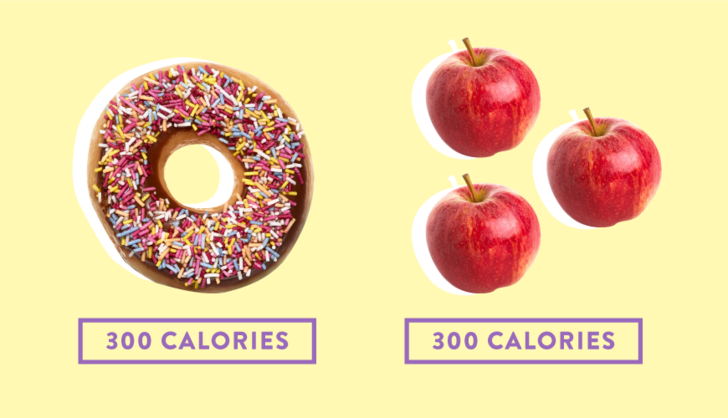
What most people fail to realize is that there is more than one type of calorie. There is empty calories and then there is the calories found in nutrient dense foods (remember me talking about density?). Empty calories are those you find in sugary products, such as sodas, that have simple carbohydrates that our bodies easily break down and are more likely to store as fat. Foods that are known as empty calories have NO nutritional value. This means you just consumed calories and it did nothing for you, but it still counts as calories consumed. Nutrient dense foods are those that contain complex carbohydrates that the body slowly breaks down and uses for your nutrient needs. Take this example: a pear and a handful or Carmel popcorn contain roughly the same amount of calories. The pear is obviously a healthier choice, it is nutrient dense and the body can use it for great benefits. Those are calories your body will actually use for energy. The handful of carmel popcorn will probably just be a tease and leave you wanting more popcorn and your body will not use those calories for the same benefit.

Like I mentioned before, everyone’s nutritional needs are different, regardless if you’re the same age, gender, weight, height, etc. Simply put, the more active you are, the more energy you will need to intake. If you live a sedentary lifestyle, there is absolutely no need to consume that extra energy! If you aren’t going to use the energy, what’s the point?

The nutritional decisions you make today, right now, affects the rest of your life. If you don’t make time for your health today, you will schedule your life around it in the future with mandatory doctor appointments. I challenge you to stop letting food control you. Your body is yours, no one else’s. What goes into it is 100% your decision and you have control of that. Your nutritional status is no one else’s fault but your own and nutritional decisions are those that only you can make for yourself!

We eat to survive.

-D.A.

Design a site like this with WordPress.com
Get started